
 South KoreaTravel
Travellers to South Korea: Pyongyang restarts border propaganda, Seoul urges talks
North Korea says it will install loudspeakers along the entire border with South Korea and resume anti-Seoul propaganda broadcasts. South Korea's military and Ministry of Unification are urging Pyongyang to return to talks.
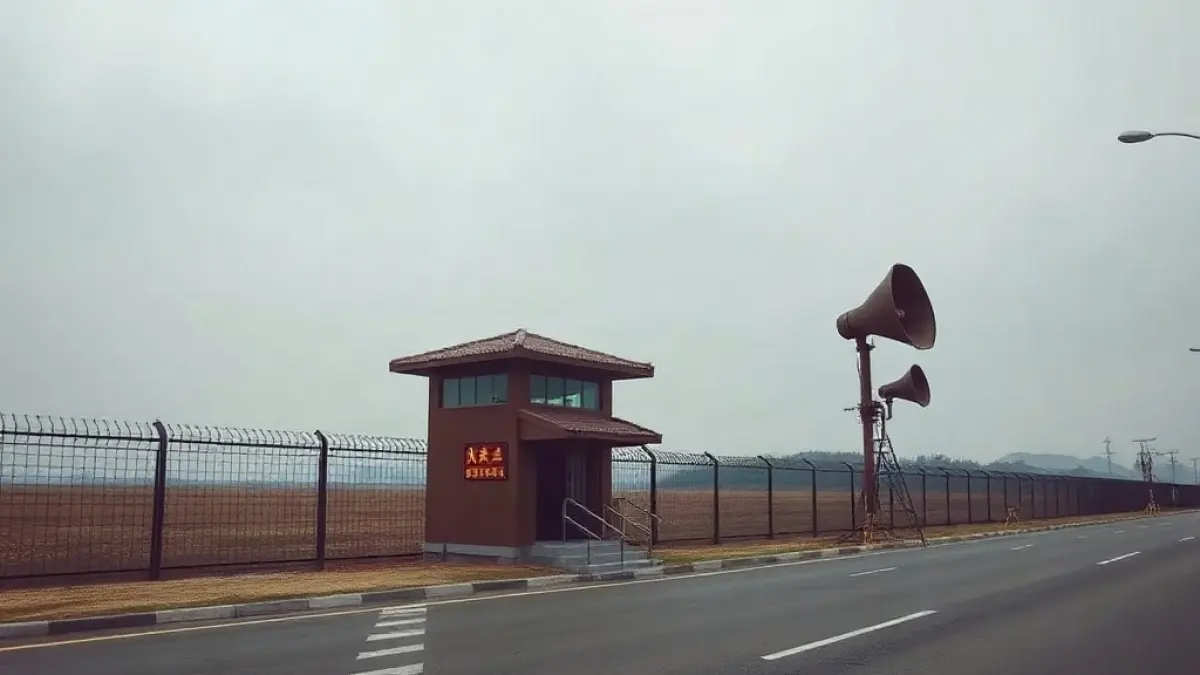
North Korea says it will place loudspeakers along the entire border with South Korea and resume broadcasting anti-Seoul propaganda, while South Korea's military and Ministry of Unification urge Pyongyang to return to talks. The announcement came from Kim Yo Jong, a senior North Korean official and the sister of leader Kim Jong Un, on Wednesday, after she visited fortifications along the contested frontier with top military officials.
Key facts
- What was announced: loudspeakers along the entire border carrying anti-South Korea propaganda.
- Who announced it: Kim Yo Jong, senior North Korean official and sister of Kim Jong Un, on Wednesday.
- South Korea's response: the military and the Ministry of Unification called for a return to talks.
- Disputed incident: South Korea says North Korean mines caused a blast last month that seriously wounded two soldiers; Pyongyang denies responsibility.
- Next diplomatic step: Seoul's Foreign Ministry said on Thursday it would send a letter to the UN Security Council.
- Background: the two Koreas are separated by the DMZ, established after the 1950-53 Korean War ended in an armistice.
What is happening at the border?
Kim said North Korean tactical units had taken up new positions. She accused South Korean troops of carrying out warning broadcasts and firing warning shots at multiple locations near the border, and warned Seoul of "the most horrible and distressing situation" if it continues what Pyongyang calls interference in North Korea's internal affairs.
South Korea's military described the warning shots as legitimate and defensive measures. North Korea has been reinforcing its side of the DMZ with mines, barriers and fencing since 2024 as it seeks to establish what it calls a permanent border with South Korea.
Why are tensions rising?
South Korea says mines planted by North Korea as part of that fortification work caused a blast last month that seriously wounded two soldiers. Pyongyang denies responsibility and calls the incident a South Korean fabrication.
Seoul's Foreign Ministry said on Thursday it would send a letter to the UN Security Council arguing that the blast was caused by North Korean mines and amounted to a violation of the Korean War armistice. A ministry spokesperson said the letter will demand an apology from Pyongyang and urge dialogue to prevent escalation.
What is South Korea's position?
South Korea's military and Ministry of Unification urged Pyongyang to return to talks to resolve differences. Since taking office in June last year, President Lee Jae Myung has pursued diplomatic engagement and tension reduction, despite Pyongyang's refusal to resume dialogue and its designation of South Korea as a hostile state.
His administration halted South Korean loudspeaker broadcasts and dismantled fixed border loudspeakers last year. Seoul described those steps as key confidence-building measures, after which North Korea suspended its own broadcasts towards South Korea.
What this means for travellers
The announcement concerns military activity and propaganda broadcasting along the heavily fortified inter-Korean frontier. The source does not announce any changes to visas, entry rules or travel restrictions for South Korea, and it sets out no specific guidance for visitors.
No date has been given for when the loudspeakers will be installed or when the broadcasts will begin. South Korea's letter to the UN Security Council is the next stated step, and it also calls for dialogue to prevent further escalation.
Also about:  North Korea