
 South KoreaVisas
South Korea's care worker visa fills just 41 of 400 places since 2024
Only 41 foreign nationals have received South Korea's E-7-2 care worker visa since its July 2024 launch, against an annual quota of 400, lawmaker Ahn Cheol-soo said. The government is now looking at care robots and training young Koreans.
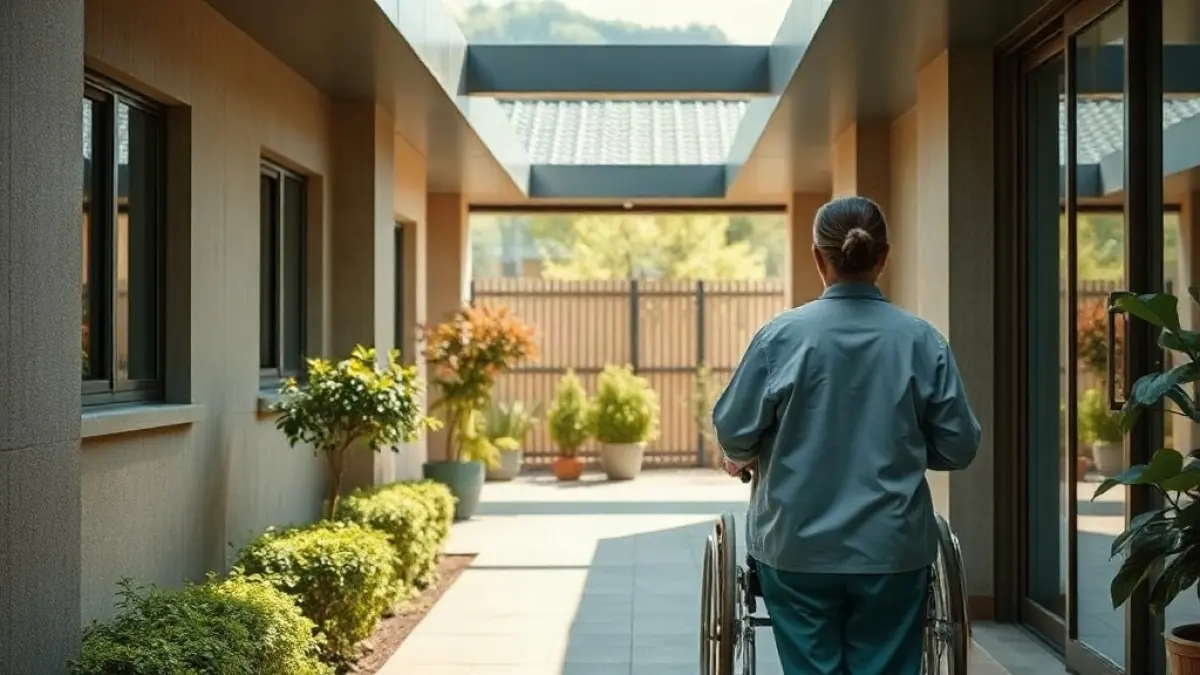
South Korea has granted its E-7-2 care worker visa to just 41 foreign nationals since the scheme began as a pilot in July 2024, well below the annual quota of 400, Rep. Ahn Cheol-soo of the People Power Party said on 21 October 2026. The shortfall is limiting the programme's intended role in easing staff shortages at residential elderly care facilities, and the government is turning to care robots and young Korean recruits as alternatives.
Key facts
- 41 visas issued in total: none in 2024, 18 in 2025 and 23 between January and September 2026
- Annual quota is 400; the pilot started in July 2024
- Eligibility: graduates of Korean colleges or universities with an associate degree or higher, a caregiver certificate and Korean of at least Level 3
- Holders may work only at residential elderly care facilities, not home-visit providers
- All 41 holders stayed at their first employer; 11 have permission to extend their stay
- A plan to train 100,000 young people in care robotics and AI was presented on 14 October 2026
Who can apply for the E-7-2 visa?
The visa is aimed at foreign graduates of South Korean colleges and universities. Applicants need an associate degree or higher, a caregiver certificate and Korean-language proficiency of at least Level 3, and the visa lets them work as care workers at residential elderly care facilities.
The visa does not permit holders to work for home-visit care providers. Ahn said this restriction could make the jobs less attractive to candidates.
Why is uptake so low?
At the end of 2025, 7,623 foreign care workers were recorded as working at long-term care institutions: 5,425 for home-visit providers, 2,439 at residential facilities and 241 in both. Separately, 71.3 percent of foreign nationals holding caregiver qualifications — 18,973 out of 26,596 — had no recorded employment status or workplace, according to the data cited by Ahn.
Some facilities have reportedly turned away prospective residents because of staff shortages. Experts say low pay and limited social recognition make care work unattractive. The Presidential Committee on Ageing Society and Population Policy estimates annual salaries for care workers at 24 million won to 35 million won ($18,000-$26,000), against a median annual wage of 34.17 million won for Korean workers in 2024.
What is the government considering instead?
Policymakers are exploring care robots and training young Koreans to support care technology. In a 2025 survey of 330 care facilities with capacity for at least 80 residents, 89.1 percent saw a need to introduce care robots, 51.8 percent would consider adopting them with financial support and 6.4 percent had already introduced them, according to the Korea Development Institute (KDI).
The KDI estimates an additional 990,000 care workers would be needed by 2043 to keep the 2023 workload per worker unchanged. On 14 October, the Presidential Committee on Ageing Society and Population Policy presented a plan to train 100,000 young people to work with robotics and artificial intelligence in eldercare, with deployment in depopulating areas from 2028. Details of the training and employment arrangements have yet to be finalised.
First Vice Minister of Health and Welfare Hyun Soo-yeop said young people would help care workers become familiar with the technology and support the adoption of AI-equipped smart homes and facilities.
What this means for travellers
Foreign graduates of Korean institutions considering care work should note that the E-7-2 visa covers only residential elderly care facilities and requires a caregiver certificate plus Korean of at least Level 3. The visa remains open within its annual quota of 400, and holders have been able to extend their stay — 11 of the 41 have done so.
No changes to the visa's rules or quota have been announced. The next milestones to watch are the finalised training and employment arrangements for the 100,000-person scheme and its planned rollout in depopulating areas from 2028.
Also about:  Japan