
 South KoreaVisas
Travelling to Korea for Study? Indian Applicants Need D-2 or D-4 Visa First
Indian students heading to South Korea generally need a D-2 visa for degree courses or a D-4 for language and training programmes. Applications go through the South Korean embassy, consulate or an authorised visa application centre in India.
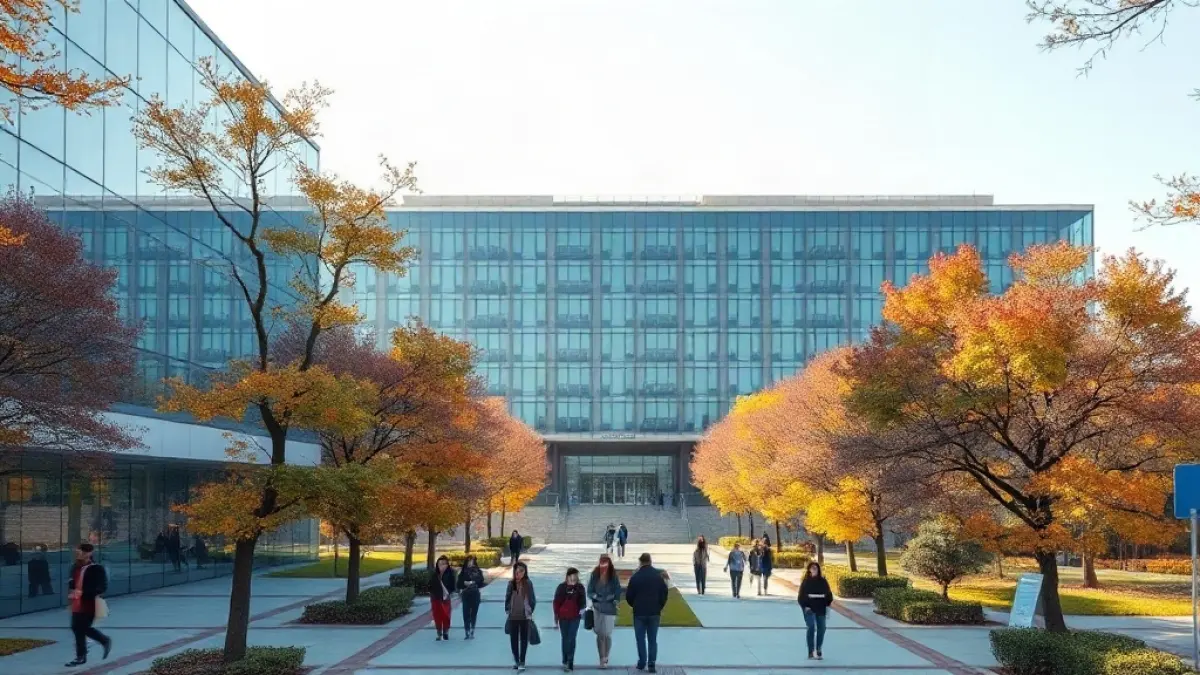
Indian students planning to study in South Korea generally need a student visa before travelling: a D-2 visa for degree programmes or a D-4 visa for Korean-language and certain other training courses. Admission from a recognised South Korean institution comes first, and applications are submitted through the South Korean embassy, consulate or an authorised visa application centre in India.
Key facts
- The D-2 visa covers bachelor's, master's, doctoral, exchange and research study at South Korean higher education institutions.
- The D-4 visa covers Korean-language courses and certain other approved training programmes.
- Short courses or exchange programmes lasting less than 90 days may have different visa requirements.
- Average annual undergraduate tuition is KRW 4,270,000 at national and public universities and KRW 7,630,000 at private universities.
- Estimated living costs are around KRW 750,000–1,000,000 per month for many students.
- Visa approval is not guaranteed.
Which visa do you need?
South Korea offers several student visa categories. The D-2 Degree Student Visa is for eligible bachelor's, master's and doctoral programmes; there are also D-2 categories for exchange students and for research students at recognised academic institutions. The D-4 Korean-Language Training Visa is for eligible language courses, and a D-4 General Training Visa covers certain other approved training programmes outside the D-2 category.
As a general rule, D-2 is used for degree-level study and D-4 mainly for eligible training courses. Students are advised to confirm the correct visa type with their educational institution before applying.
What are the academic and language requirements?
For a bachelor's degree, students usually need to complete 12 years of schooling or an accepted equivalent. A relevant bachelor's degree is normally required for a master's programme, and a relevant master's degree for doctoral study. Universities may also set minimum marks or grade requirements.
Applicants taking courses taught in Korean may need to provide a TOPIK score where the university or course requires it. For English-taught courses, proof of English language skills may be required, and some universities accept IELTS, TOEFL or other approved tests. Entrance exams or interviews may also form part of the admission process.
What documents and proof of funds are required?
Applicants may need a valid passport, a completed visa application form, a recent passport-size photograph, a Certificate of Admission from the South Korean institution, academic certificates and transcripts, and proof of the highest level of education completed. Financial documents can include bank statements or a bank balance certificate, sponsor income or tax documents, proof of tuition fee payment, scholarship letters and education loan documents. A tuberculosis test certificate may be required for some applicants, along with proof of family relationship when a parent's financial documents are used.
There is no single proof-of-funds amount that applies to every student. The amount and documents required can depend on the university, visa type, location and the student's circumstances. Not every student needs to submit every document on the list, since requirements differ by university, visa type and the consular office handling the application.
How much does studying cost?
Average annual tuition fees are KRW 6,820,000 for undergraduate programmes across all universities — KRW 4,270,000 at national and public institutions and KRW 7,630,000 at private ones. Graduate programmes average KRW 4,220,000 overall, with KRW 2,480,000 at national and public universities and KRW 4,430,000 at private universities. These are averages; extra fees may apply for admission, laboratories and other services.
Monthly living costs are estimated at KRW 500,000–700,000 for accommodation, KRW 200,000–300,000 for food and groceries, KRW 50,000–100,000 for public transport and KRW 100,000–200,000 for other expenses such as mobile service, internet and insurance. Many students spend around KRW 750,000–1,000,000 per month in total, though Seoul can be more expensive than other cities.
What funding is available?
The Global Korea Scholarship (GKS), offered by the South Korean government, may cover tuition fees, a monthly allowance, travel costs and Korean-language training, depending on the scholarship category. Universities, local governments, private foundations and research departments may also offer tuition reductions, allowances or research funding. Gaining admission does not automatically mean receiving a scholarship, so students should check application dates, academic and language requirements and benefits before applying.
How do you apply?
The process starts with choosing a university and course, checking admission rules, tuition, scholarships, language requirements and deadlines, then preparing academic certificates, mark sheets, passport and language test results. Students apply directly to the university and pay any application fee, and submit separate applications where scholarships require them.
Once admitted, students confirm their place, obtain the admission letter and other visa documents, and prepare proof of funds. The visa application is then filed through the designated South Korean embassy, consulate or authorised visa application centre in India. After approval, students arrange accommodation, travel and health insurance, and complete residence and university registration steps after arriving in South Korea.
What this means for travellers
Students should confirm the correct visa category with their institution, check the latest document checklist with the consular office that will handle the application, and prepare proof of funds early. Eligible students may work part-time with the required immigration permission and under the applicable conditions, and graduates may be able to change to a suitable residence status to seek employment or work in South Korea, subject to immigration rules.
Requirements vary by university and programme, and visa approval is not guaranteed, so applicants should check the latest rules and prepare their documents carefully before submitting.
Also about:  India