
 DR CongoTravel
Travellers face handwashing and temperature checks at DRC's new Ebola screening
Health authorities in the Democratic Republic of the Congo and South Sudan, backed by WHO, are stepping up Ebola surveillance at border crossings in Haut-Uélé province. Travellers face handwashing, temperature checks and symptom screening at entry points.
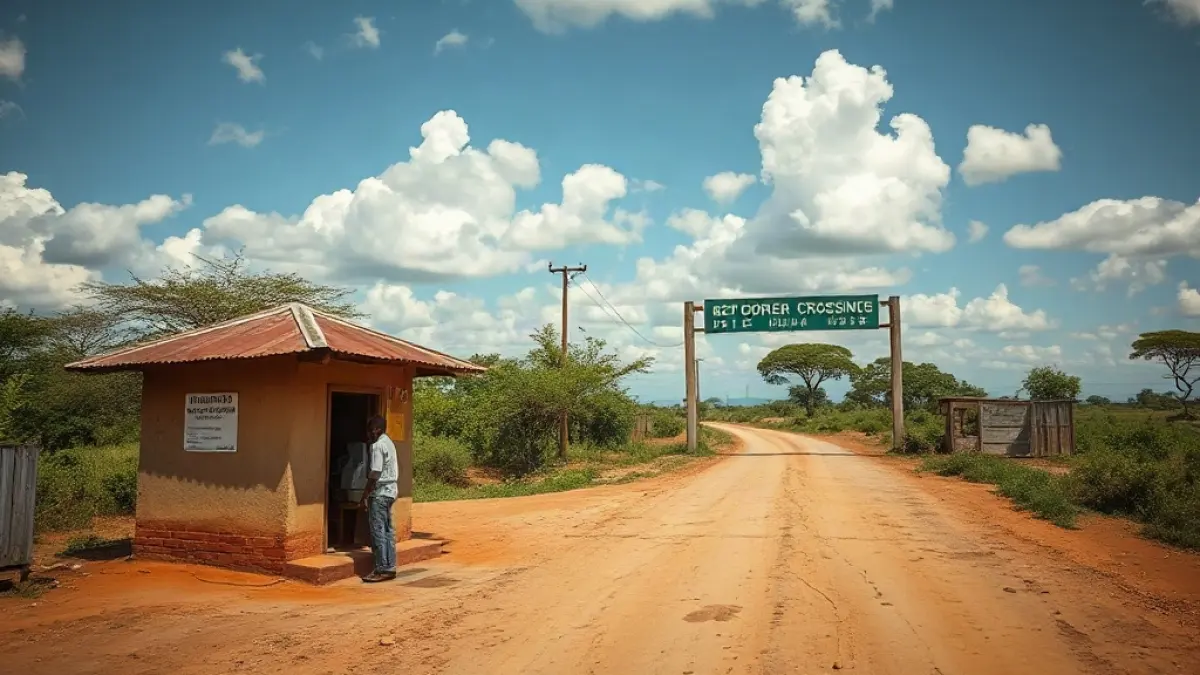
Health authorities in the Democratic Republic of the Congo (DRC) and South Sudan, with support from the World Health Organization (WHO), are strengthening cross-border Ebola surveillance after an outbreak in Haut-Uélé province. Travellers crossing between the two countries can expect health screening measures at points of entry.
Key facts
- As of 17 October 2026, Haut-Uélé province had recorded 408 confirmed cases and 176 deaths
- 7 of the province's 13 health zones have been affected; Aba has reported no cases
- More than 26,000 South Sudanese refugees live in the Aba health zone, about 18 km from the border
- Five of 11 proposed entry and control points in Aba are already operational
- Screening at points of entry includes handwashing, temperature checks and information collection
What is changing at the border?
Health officials from both countries met in Aba, a strategic surveillance point about 436 km from Isiro, the capital of Haut-Uélé province, to set up shared mechanisms for surveillance and response. The meeting produced a roadmap covering information sharing, disease surveillance, joint investigations and risk communication.
Dr Patrick Banza Piongo, Head of the Haut-Uélé Provincial Health Division, said the two sides agreed a weekly schedule for sharing information on communication and disease surveillance.
What screening do travellers face?
At points of entry, the system relies on handwashing, temperature checks and information collection to quickly identify travellers with suspicious symptoms. A temporary isolation space allows suspected cases to be held until a rapid response team intervenes for investigations, sample collection and patient care.
In Aba, five of the eleven proposed entry and control points are already operational. The health zone still faces shortages of personal protective equipment, inadequate isolation capacity and the absence of an ambulance for transferring suspected cases. Assessments are under way by the Ministry of Health with partner support to fill these gaps.
What support is WHO providing?
WHO is supporting capacity building in South Sudan and other neighbouring countries at risk of importing the virus. This includes assessing existing capacities, strengthening disease surveillance, training in contact tracing and investigations, enhancing laboratory detection and confirmation capacities, preparing treatment facilities and training health professionals.
Dr Marie Roseline Bélizaire, WHO Africa's Regional Director for Emergencies, said the priority is to strengthen the capacities of neighbouring countries so they can quickly detect alerts, confirm suspected cases and ensure patient care.
What this means for travellers
Travellers crossing between the DRC and South Sudan in the Aba and Yei areas should expect health screening at points of entry, including handwashing and temperature checks, and should allow extra time. Anyone who develops suspicious symptoms should report them at the border post, where a temporary isolation space and rapid response team are in place.
Joint investigations, contact tracing and harmonized awareness messages for communities are planned in Aba and Yei alike. No timeline has been announced for completing the remaining entry and control points in Aba.
Also about:  South Sudan