
 North KoreaTravel
Mine blasts and returning border loudspeakers heighten risk for North Korea travel
North Korea says propaganda loudspeakers along the entire border with South Korea will be operating within October, reviving psychological warfare after land mine blasts injured three South Korean soldiers.
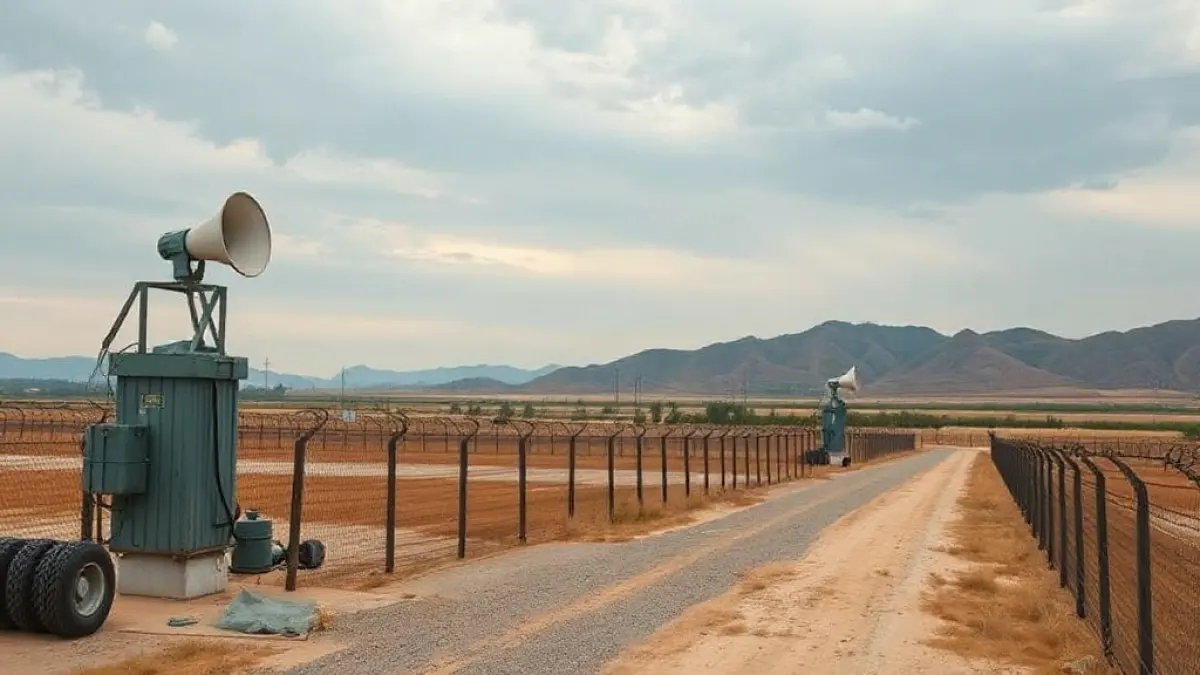
North Korea plans to restart anti-Seoul propaganda broadcasts along the heavily armed border with South Korea, with loudspeakers due to be running along the whole frontier within October, Kim Jong Un's sister said. The announcement revives a Cold War-era psychological warfare campaign as tensions rise after land mine blasts injured three South Korean front-line soldiers.
Key facts
- Announced: Wednesday 21 October 2026 by Kim Yo Jong, followed by a further statement on Thursday 22 October 2026
- Timing: loudspeakers to be operating along the whole border within October; "new counter means" to be placed on alert along the border, with speakers on standby within days
- Trigger cited: land mine blasts on 21 September that injured three South Korean front-line soldiers
- Border activity: South Korea's military says North Korean soldiers crossed the military demarcation line 50 times this year during fortification work
- South Korea's response: Seoul says it will take "proportionate measures" but has not given details
What has North Korea announced?
Kim Yo Jong said after visiting front-line areas where North Korean troops are reinforcing the border that psychological warfare loudspeakers would be in operation along the entire border within October. She said North Korean "tactical hunting teams" were taking up new positions and that the North would put "new counter means" on alert along the border, with the speakers on standby within days.
She also renewed a threat to retaliate against any South Korean provocation linked to the fortification work, warning that if South Korean warning shots cause harm to North Korean territory or personnel, border guards would respond without mercy.
Why is this happening now?
North Korea has been adding mines, barbed wire fences, anti-tank barriers and other fortifications to what is already one of the world's most heavily armed borders. Kim Jong Un has declared South Korea his most hostile adversary and is pushing a policy of permanently severing ties with Seoul amid a broader diplomatic stalemate with Washington.
Kim Yo Jong toured the area with Marshal Pak Jong Chon, a senior military official, and described the fortification work as a "sacred and great undertaking". North Korea's state-run Korean Central News Agency first reported the border visit as taking place on Tuesday, but Kim later corrected this to early Wednesday.
Following an inspection with the U.S.-led United Nations Command, South Korea formally blamed North Korean-planted mines for the 21 September border blasts and urged the North to apologise and clear its remaining mines. North Korea denied responsibility and warned of strong retaliation if provoked.
How has South Korea responded?
South Korean Defense Ministry spokesperson Chung Binna said Seoul would need to take proportionate measures in response to the North's moves along the border, but did not elaborate on what steps are being considered. South Korea's Joint Chiefs of Staff chairman, Jin Yong-Sung, called Kim's threats intolerable and ordered the military to respond sternly to any provocations.
South Korea's military says North Korean soldiers crossed the military demarcation line 50 times this year during fortification work, and that it responded with warning shots and broadcasts. Kim Yo Jong dismissed those claims as a false pretext. Pak Jong Chon denied the soldiers were breaching the border, saying the North Korean army knows where the borderline is better than anyone.
Background
Loudspeaker broadcasts are among the Cold War-era psychological warfare tactics the two Koreas have occasionally used against each other during periods of tension. South Korea's liberal government, led by President Lee Jae Myung, halted its broadcasts after taking office last year to improve ties with the North, which later stopped its own.
No start date beyond "within October" has been given for the resumed broadcasts, and South Korea has not said what measures it may take in response.
Also about:  South Korea